We Have Enough Electric Capacity to “Fill Up” Plug-In Vehicles
If all the cars and light trucks in the nation
switched from oil to electrons, idle capacity in the existing electric power
system could generate most of the electricity consumed by plug-in hybrid
electric vehicles.
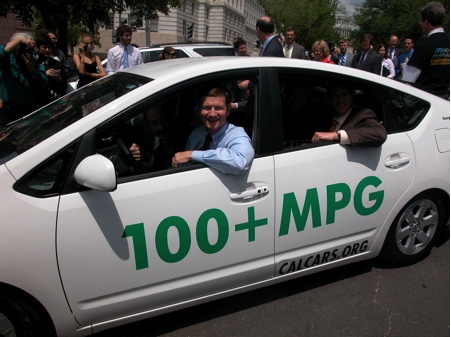
If all the cars and light trucks in the nation switched from oil to electrons, idle capacity in the existing electric power system could generate most of the electricity consumed by plug-in hybrid electric vehicles. A new study for the Department of Energy finds that “off-peak” electricity production and transmission capacity could fuel 84 percent of the country’s 220 million vehicles if they were plug-in hybrid electrics.
“This is the first review of what the impacts would be of very high market penetrations of PHEVs, said Eric Lightner, of DOE’s Office of Electric Delivery and Energy Reliability. “It’s important to have this baseline knowledge as consumers are looking for more efficient vehicles, automakers are evaluating the market for PHEVs and battery manufacturers are working to improve battery life and performance.”
“We were very conservative in looking at the idle capacity of power generation assets,” said PNNL scientist Michael Kintner-Meyer. “The estimates didn’t include hydro, renewables or nuclear plants. It also didn’t include plants designed to meet peak demand because they don’t operate continuously. We still found that across the country 84 percent of the additional electricity demand created by PHEVs could be met by idle generation capacity.”
The study also looked at the impact on the environment of an all-out move to PHEVs. The added electricity would come from a combination of coal-fired and natural gas-fired plants. Even with today’s power plants emitting greenhouse gases, the overall levels would be reduced because the entire process of moving a car one mile is more efficient using electricity than producing gasoline and burning it in a car’s engine.
“The potential for lowering greenhouse gases further is quite substantial because it is far less expensive to capture emissions at the smokestack than the tailpipe. Vehicles are one of the most intractable problems facing policymakers seeking to reduce greenhouse gas emissions,” said Pratt.
Finally, the study looked at the economic impact on consumers. Since, PHEVs are expected to cost about $6,000 to $10,000 more than existing vehicles – mostly due to the cost of batteries — researchers evaluated how long it might take owners to break even on fuel costs. Depending on the price of gas and the cost of electricity, estimates range from five to eight years – about the current lifespan of a battery. Pratt notes that utilities could offer a lower price per kilowatt hour on off-peak power, making PHEVs even more attractive to consumers.
The article takes a conservative look at existing factors. There can be additions to the equation which offer a positive increase in potential; but, that isn’t the point. Which is — we already have the capacity to benefit consumers and energy producers.
Posted: Tue - December 12, 2006 at 08:26 AM